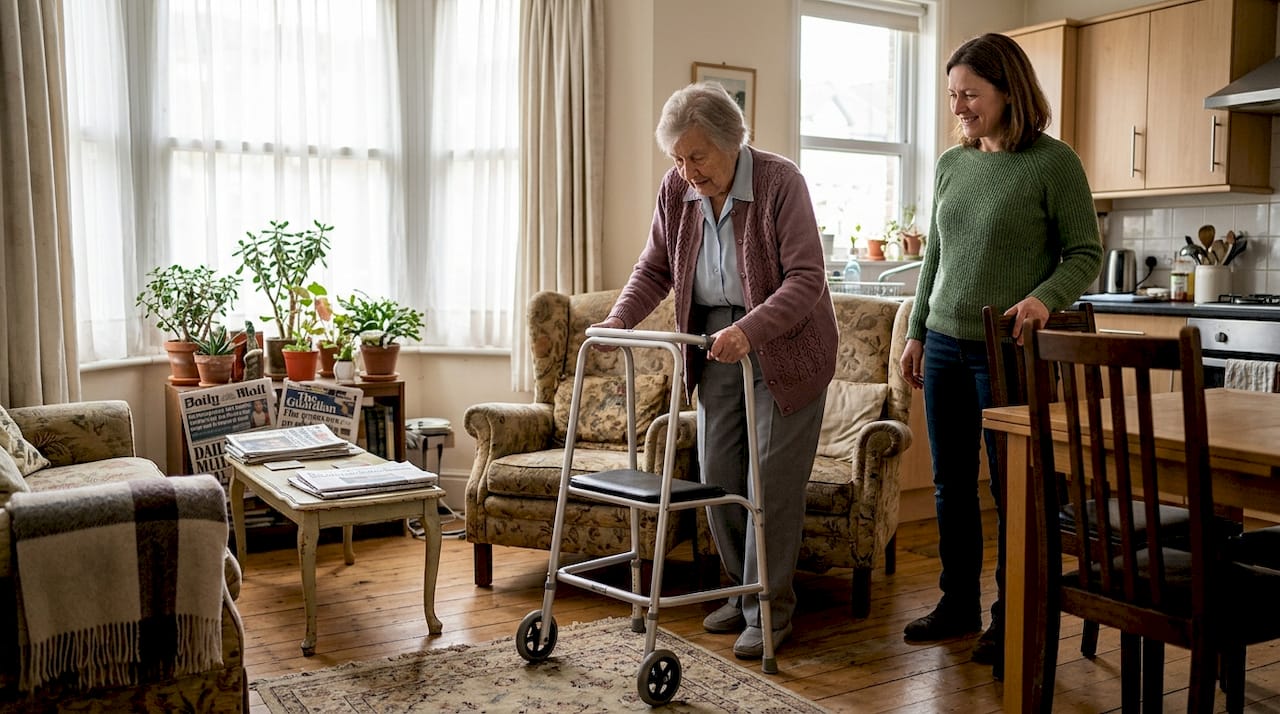

If you are caring for an elderly relative in the UK, start with these three actions today: request a carer’s assessment under the Care Act 2014, contact your GP or local council social services, and write a contingency plan listing medications, emergency contacts and daily routines.
These steps are not optional extras. They are the gateway to statutory support, funded services and your own legal rights as an unpaid carer. The sooner you take them, the more options you will have.
Get started now:
- Carer’s assessment: Contact your local council social services department and ask for one. Every adult carer has a statutory right to this assessment regardless of income or hours spent caring. Eligibility for support is assessed afterwards, but the right to an assessment is universal under the Care Act 2014.
- GP or NHS 111: Call the GP for a health review of the person you care for. For urgent health concerns, ring NHS 111.
- Contingency plan: Write it down now — medications, allergies, emergency contacts, care preferences and a brief daily routine. Carers UK has a free template.
- Key contacts to have ready: local council number, GP surgery, pharmacy, and a trusted family member or neighbour who can step in.
- Documents to gather: repeat prescription list, medical history summary, any existing care or hospital letters, and financial information if a means test may be relevant.
Age UK (0800 678 1602) and Carers UK (0808 808 7777, Monday to Friday, 9am–6pm) can both advise you on next steps if you are unsure where to begin.
Table of Contents
- What care options are available and which one fits your situation?
- How to get care started in the UK: a step-by-step process
- How is care paid for in the UK and what should you check?
- Practical daily care: personal care, medication, meals and safety
- Which home changes and technology help older people stay independent?
- How do carers protect their own health and avoid burnout?
- When should you consider more intensive or residential care?
- What do carers need to know about consent, capacity and safeguarding?
- What should you check before hiring a home care agency?
- Why families in London choose Kells Domiciliary Care
- Key takeaways
- An honest perspective on what family carers actually need
- How Kells-care supports families from first enquiry to ongoing care
- Useful contacts and further reading
What care options are available and which one fits your situation?
Understanding the main types of care helps you match the right support to the right need. Here is a plain-language summary.
Domiciliary (home) care covers hourly or regular visits from a paid carer who helps with personal care, medication, meals and domestic tasks. It suits people who are largely independent but need structured daily support. This is the most common starting point for families assisting elderly individuals who want to remain at home.

Live-in care places a carer in the home around the clock. It is often comparable in cost to a residential care home, and for someone with dementia or complex mobility needs it can be a genuine alternative. The person stays in familiar surroundings, which matters enormously for those with cognitive decline.
Respite care gives the primary carer a planned break. It can be provided at home by a relief carer, at a day centre, or through a short residential stay. Carers UK describes breaks as vital for sustaining long-term caring, and the NICE guideline NG150 on supporting adult carers explicitly lists replacement care as a professional responsibility.
Residential and nursing homes are appropriate when needs exceed what can safely be managed at home, particularly where 24-hour clinical oversight is required. A nursing home differs from a residential home in that registered nurses are on site.
Telecare and assistive technology includes pendant alarms, automatic fall detectors, GPS trackers, medication dispensers and smart doorbells. These tools supplement personal care rather than replace it, but they can extend the period someone lives safely at home. See the home adaptations section below for more detail.
Pro Tip: Live-in care is not automatically more expensive than a care home. Get a like-for-like cost comparison before assuming residential care is the only affordable intensive option.
How to get care started in the UK: a step-by-step process
Arranging care for the first time can feel complicated. Follow these steps in order.
-
Identify the needs. Write down what the person struggles with: personal hygiene, mobility, medication, meals, continence, memory. Be specific. This list drives every assessment that follows.
-
Contact the GP. Ask for a health review and a referral to any relevant specialists (district nurse, occupational therapist, memory clinic). The GP can also flag NHS-funded support options.
-
Contact local council social services. Use GOV.UK’s council finder to locate the right team. Ask for a needs assessment for the person you care for and a separate carer’s assessment for yourself.
-
Request a carer’s assessment under the Care Act 2014. Under section 10 of the Care Act, every adult providing unpaid care has the right to this assessment. It is separate from the cared-for person’s assessment. It considers your health, work, relationships and ability to continue caring, and it can unlock respite, practical help and sometimes financial support.
-
Prepare for the assessment. Bring the medications list, a written daily routine, a note of any recent falls or incidents, and financial information if a means test is likely.
-
Agree a support plan and review schedule. After assessment, the council will decide eligibility and set out what support it will provide. Ask for a written plan and a review date. Care and support statutory guidance requires local authorities to take a whole-family approach, so your needs as a carer must be considered alongside those of the person you support.
-
Arrange any private or additional care. If the council’s support does not cover all needs, or if you are self-funding, contact a CQC-regulated home care agency. See the agency checklist section below.
Pro Tip: Many carers do not realise the carer’s assessment is theirs alone. You do not need the person you care for to be present, and you do not need to prove financial hardship to qualify.
How is care paid for in the UK and what should you check?
Funding is one of the most confusing parts of arranging senior care support. There are four main routes.
Self-funding applies when the person’s savings and assets exceed the means-test threshold set by the local authority. Self-funders pay for care privately, either through a care agency or by employing a carer directly.
Means-tested local authority support is available when assets fall below the threshold. The council conducts a financial assessment alongside the needs assessment. If eligible, the council arranges and contributes to the cost of care. You can also request a direct payment, which gives you control over how the budget is spent.
NHS Continuing Healthcare (CHC) is fully funded by the NHS for people with a primary health need. It is not means-tested. A checklist assessment is carried out first, followed by a full assessment if the checklist is met. CHC is often missed by families who assume it only applies to people in hospital.
Benefits to check immediately:
- Attendance Allowance: for people aged 65 or over who need help with personal care or supervision due to illness or disability. Not means-tested.
- Carer’s Allowance: worth £86.45 a week in 2026–27 if you care for someone for at least 35 hours a week and they receive a qualifying disability benefit.
- Carer’s Credit: protects your State Pension entitlement if you cannot claim Carer’s Allowance.
- Personal Independence Payment (PIP): for working-age adults with a disability or long-term health condition.
A benefits check is worth doing even if you think you will not qualify. Carers UK’s helpline (0808 808 7777) can help you work through entitlements.
Practical daily care: personal care, medication, meals and safety
Good daily routines reduce risk and preserve dignity. These tips are drawn from NHS guidance and established carer practice.
Personal care and continence
- Always explain what you are about to do before you do it. Consent and dignity matter in every interaction, however routine.
- Use a shower chair or bath board to reduce fall risk during washing. Non-slip mats are inexpensive and effective.
- For continence support, speak to the GP or district nurse about a continence assessment. Pads, sheaths and other aids may be available on prescription.
Medication management
- Use a dosette box (pill organiser) to separate daily doses. Many pharmacies will pre-fill these for a small charge or free of charge.
- Ask the GP surgery to set up a repeat prescription linked to the pharmacy, so medication is ordered and delivered automatically.
- Keep a written medication list (drug name, dose, time, prescriber) in a visible place and in the contingency plan.
Nutrition and mealtimes
- Older people often have reduced appetite. Smaller, more frequent meals with higher calorie density (full-fat dairy, eggs, fortified cereals) are more effective than three large meals. Meals on Wheels and similar services can be arranged through the local council.
- Dehydration is common and often unrecognised. Offer fluids regularly throughout the day, not just at mealtimes.
- Local lunch clubs for older adults can support both nutrition and social connection.
Home safety and fall prevention
- Clear walkways of loose rugs, trailing cables and clutter.
- Fit nightlights in hallways and bathrooms.
- Check footwear: well-fitting, non-slip shoes or slippers reduce falls significantly.
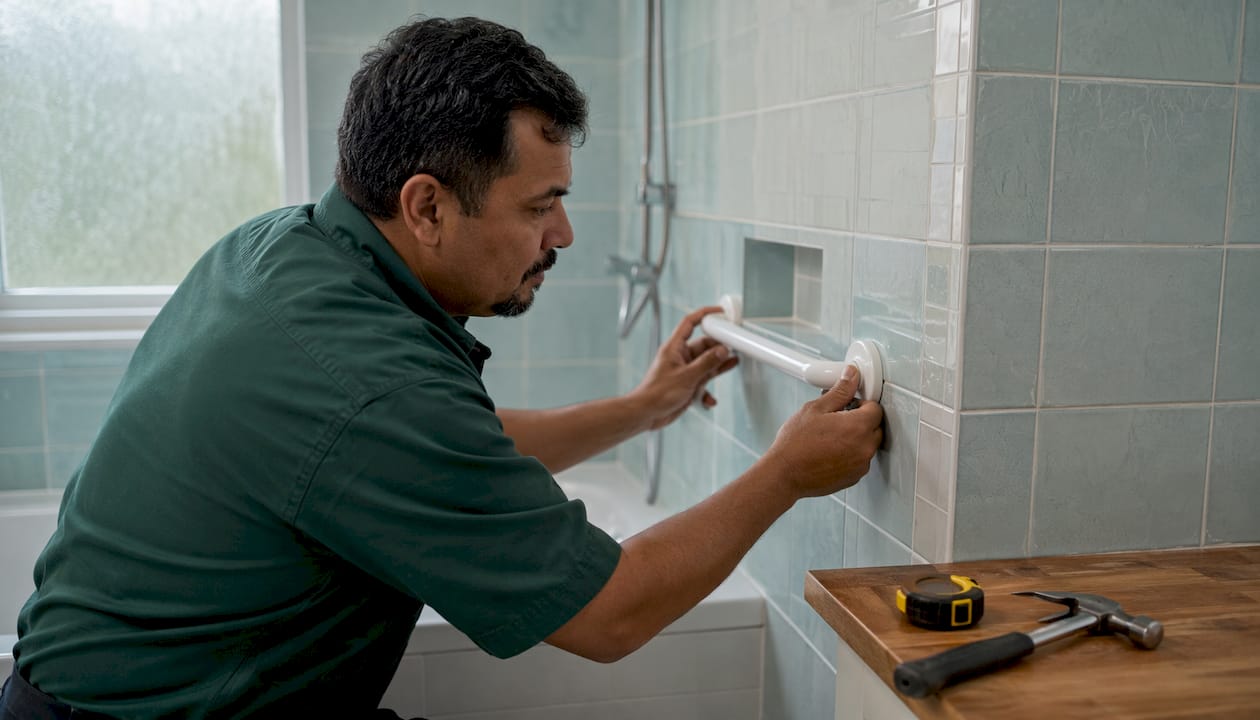
- Install grab rails beside the toilet, bath and at the front door.
Pro Tip: Call the GP or NHS 111 immediately if you notice sudden confusion, new breathlessness, a high temperature, or a significant change in behaviour. These are red flags that need clinical assessment, not a wait-and-see approach.
For a more detailed daily care checklist, Kells-care’s elderly care tips for London families covers morning and evening routines step by step.
Which home changes and technology help older people stay independent?
Small adaptations often make the biggest difference. Statutory guidance and NICE both emphasise preventative home adaptations as a way to avoid crises and reduce the intensity of care needed later.
Minor adaptations (low cost, high impact)
Grab rails, raised toilet seats, lever taps, non-slip flooring strips and bed rails can all be installed quickly and cheaply. Many local councils provide these free or at low cost following an occupational therapy (OT) assessment. Ask the GP or social services for an OT referral.
Larger adaptations
Wet-room conversions, stairlifts and through-floor lifts are more significant investments. A Disabled Facilities Grant (DFG) is available through the local council for means-tested help with these costs. The maximum grant in England is set by government and worth checking with your council directly.
Telecare and assistive technology
- Pendant alarms connect to a 24-hour monitoring centre. The person presses a button if they fall or feel unwell.
- Automatic fall detectors trigger an alert without the person needing to press anything.
- Medication reminders and dispensers prompt the person to take tablets at the right time and can lock away doses to prevent accidental double-dosing.
- Smart doorbells and door sensors let remote family members monitor arrivals and departures.
- GPS trackers are particularly useful for people with dementia who may leave the home unsafely.
Community engagement also supports independence. Research shows that community events help seniors build connections and reduce isolation, which in turn reduces the risk of cognitive decline.
How do carers protect their own health and avoid burnout?
Caring for someone you love is rewarding. It is also physically and emotionally demanding, and the risk of burnout is real. Mind’s guidance on carers’ mental health identifies stress, anxiety, depression and isolation as common experiences for unpaid carers.
Recognising the warning signs early is the first protective step. Watch for:
- Persistent tiredness that sleep does not resolve
- Feeling resentful, irritable or detached from the person you care for
- Withdrawing from friends, hobbies or activities you previously enjoyed
- Physical symptoms: headaches, frequent illness, disrupted sleep
- Feeling that you cannot cope or that things are getting worse
Mind’s self-care resource for carers and the NICE NG150 guidance both emphasise that carers need tailored support, not generic advice. Strategies that work for one person may not work for another.
Practical steps that tend to help:
- Schedule at least one protected period each week that is yours alone, even if it is only an hour.
- Use micro-mindfulness techniques during difficult moments: slow your breathing, pause before responding, take three deliberate breaths. These brief techniques can reduce the immediate physiological stress response.
- Request respite care through the council or a private agency so you can take a proper break.
- Connect with other carers. Carers UK’s online forum and local carer support groups (find yours at Connecting Carers) reduce isolation and provide practical peer advice.
Key helplines:
- Carers UK: 0808 808 7777, Monday to Friday, 9am–6pm
- NHS Every Mind Matters: free online mental health support at nhs.uk/every-mind-matters
- Mind: 0300 123 3393
Guilt about asking for help is one of the most common feelings carers describe. Accepting support is not a failure. It is what makes long-term caring sustainable.
When should you consider more intensive or residential care?
Most families do not plan for this conversation in advance, which means it often happens in a crisis. Knowing the common triggers helps you act before a situation becomes dangerous.
Common triggers for stepping up support:
- Repeated falls, particularly at night or when alone
- Night-time needs that are disrupting the carer’s sleep consistently
- Rapid or unexplained weight loss
- Severe dementia-related behaviour (aggression, wandering, extreme distress)
- The primary carer becoming unwell or unable to continue
When a trigger occurs, the immediate steps are: arrange emergency respite if needed, contact the GP or district nurse for a clinical view, and request a rapid reassessment from the council. Do not wait for a scheduled review.
Weighing the options means balancing the person’s own preferences, clinical advice, immediate safety and financial implications. Live-in care at home is often the preferred first step for families who want to avoid residential care. Kells-care’s guide to alternatives to care homes sets out the options clearly for London families.
What do carers need to know about consent, capacity and safeguarding?
These legal basics are ones every family carer should understand, even if they never need to act on them formally.
Mental capacity is the ability to make a specific decision at a specific time. Under the Mental Capacity Act 2005, capacity is assumed unless there is evidence otherwise, and it must be assessed decision by decision. A person may lack capacity for complex financial decisions but retain full capacity for daily care choices.
Lasting Power of Attorney (LPA) allows a named person to make decisions on behalf of someone who loses capacity. There are two types: one for property and financial affairs, one for health and welfare. Apply through the Office of the Public Guardian at gov.uk. Apply early, while the person still has capacity to sign.
Consent in daily care means explaining what you are about to do and giving the person the chance to agree or refuse, even for routine tasks like washing or medication.
If you suspect abuse or neglect:
- Contact the local authority adult social care safeguarding team immediately.
- For immediate danger, call 999.
- Keep a written record of what you observed, with dates and times.
- You can also contact the GP, district nurse or a social worker for advice.
Record-keeping matters. Keep a simple daily log of care provided, any incidents, and any changes in condition. This protects both you and the person you care for, and it is invaluable if a formal review or safeguarding enquiry ever occurs.
What should you check before hiring a home care agency?
Choosing paid help is one of the most important decisions a family makes. Use this checklist before signing anything.
Non-negotiable checks:
- CQC registration: Every home care agency in England must be registered with the Care Quality Commission. Check the agency’s status and most recent inspection rating at cqc.org.uk before proceeding.
- DBS checks: All carers visiting your home should have an enhanced Disclosure and Barring Service (DBS) check. Ask to see evidence.
- Staff training: Ask what induction and ongoing training carers receive, and whether they have specific training for dementia, manual handling or medication administration.
- Personalised care planning: A good agency will conduct a home assessment and write an individual care plan before the first visit.
- Contract terms: Read the notice period, cancellation policy, how visits are recorded and how changes to the care plan are managed. Unclear documentation or pressure to sign quickly are red flags.
Questions to ask at the initial meeting:
- How are carers matched to clients?
- What happens if a regular carer is unavailable?
- How are concerns or complaints handled?
- Can you speak to the carer’s supervisor directly?
Kells-care’s guide to choosing a home care agency covers these questions in detail and explains what a transparent, well-run agency should be able to tell you upfront.
Why families in London choose Kells Domiciliary Care
Kells-care has been providing home care services in London for over 30 years. Every carer is DBS-checked, fully qualified and works within a CQC-regulated framework, so families have the assurance of independent oversight from the first visit.
Care is built around the individual. Whether you need hourly check-in visits, live-in care, specialist dementia personal care, domestic help, or respite support, Kells-care creates a personalised visit plan that reflects the person’s routines, preferences and clinical needs. Temporary staffing for care homes is also available for families navigating a transition between settings.
For families new to arranging care, Kells-care offers an initial discussion to help you understand your options before any commitment is made. The process is straightforward: a telephone or online enquiry, an informal conversation about needs, and a home visit to agree a care plan. Transparent pricing and a clear care agreement follow.
Download the free home care guide to get a clear picture of what to expect, or visit the Kells-care services page to explore the full range of support available.
Key takeaways
Caring for an elderly relative in the UK requires immediate action on three fronts: securing your legal right to a carer’s assessment, arranging a needs assessment for the person you support, and building a written contingency plan before a crisis forces your hand.
| Point | Details |
|---|---|
| Request a carer’s assessment | Every adult carer has a statutory right under the Care Act 2014, regardless of income or hours spent caring; eligibility for support is determined afterwards, but the right to an assessment is universal. Contact your local council to arrange one. |
| Check benefits entitlements | Carer’s Allowance is worth £86.45 a week in 2026–27; Attendance Allowance and Carer’s Credit may also apply. |
| Write a contingency plan | List medications, allergies, emergency contacts and daily routines so care can continue if you are temporarily unable to help. |
| Know when to escalate | Repeated falls, night-time needs, rapid weight loss or carer illness are triggers to request urgent reassessment and consider live-in care. |
| Kells-care for London families | Kells-care offers CQC-regulated, DBS-checked home care with personalised plans, from hourly visits to live-in and dementia care. |
An honest perspective on what family carers actually need
There is a gap between what the system promises and what families experience on the ground. The Care Act 2014 gives carers real rights, but those rights only activate when you ask for them. Councils do not routinely reach out to identify unpaid carers. Many families spend months, sometimes years, providing intensive support without ever knowing a carer’s assessment exists, let alone that it could unlock respite, equipment or financial help.
The other thing that tends to get underestimated is the cumulative weight of caring. Families often describe a slow erosion: the gradual loss of sleep, the narrowing of social life, the quiet guilt about needing a break. These are not signs of weakness. They are predictable consequences of an unsupported caring role. The research is clear that carers who receive early support, including respite and peer connection, sustain their caring role longer and in better health.
What actually works, in practice, is a combination of statutory support and reliable paid care. The statutory route gives you rights and sometimes funding. A good home care agency gives you consistency, trained staff and the peace of mind that comes from knowing someone qualified is there when you cannot be. Neither route alone is usually enough.
If you are at the beginning of this process, the single most useful thing you can do today is make two phone calls: one to your local council to request assessments, and one to a CQC-regulated agency to understand your options. Everything else follows from those two conversations.
How Kells-care supports families from first enquiry to ongoing care
For families in London who need hands-on support rather than just information, Kells-care offers a straightforward first step. A telephone or online enquiry leads to an informal conversation about the person’s needs and your situation as a carer. There is no pressure and no obligation at that stage.
From there, a home visit allows Kells-care to build a personalised care plan that reflects the person’s daily routine, preferences and any clinical requirements. Pricing is transparent, the care agreement is clear, and the visit schedule is built around you. Whether you need a few hours of support each week or full live-in care, Kells-care has provided that support to London families for over 30 years.
Download the free home care guide for a practical overview of what to expect, or speak to the team directly to arrange an initial consultation.
Useful contacts and further reading
- Care Act 2014 statutory guidance — GOV.UK: the definitive guide to local authority duties, carers’ assessments and eligibility.
- NICE guideline NG150: Supporting adult carers — best-practice guidance for practitioners and carers on assessments, information and respite.
- Carers UK helpline — 0808 808 7777, Monday to Friday, 9am–6pm. Advice on benefits, assessments and local support.
- Age UK — 0800 678 1602, ageuk.org.uk. Information and advice for people over 60 and their families.
- Mind: your mental health as a carer — practical coping strategies and signposting for carers experiencing stress or anxiety.
- NHS 111 — for urgent health concerns that are not a 999 emergency. Available 24 hours a day.
- NHS: introduction to care and support — an accessible overview of the care system for families new to arranging support.
- CQC agency checker — cqc.org.uk: search any registered home care agency to see its inspection rating and registration status.
- Connecting Carers — regional helplines and stress management advice for carers seeking local support quickly.
- GOV.UK council finder — locate your local social services department to request assessments or report a safeguarding concern.