TL;DR:
- Home safety for dementia involves making targeted environmental modifications, especially in the bathroom, to prevent falls and accidents. Creating secure boundaries through door locks, alarms, and GPS devices helps prevent wandering while maintaining independence. Regular professional assessments and phased changes are essential for adapting safety measures as dementia progresses.
A guide to home safety for dementia is a structured set of environmental modifications and safety practices designed to protect people living with cognitive decline from household hazards. The primary risks are falls, wandering, poisoning, and confusion triggered by everyday objects. Targeted changes, including grab bars, anti-scald valves, GPS tracking devices, and door sensors, can significantly reduce these dangers. Professional assessments from occupational therapists add a further layer of protection by identifying risks that are easy to overlook. This guide gives you a clear, room-by-room plan to make your home safer without removing the dignity and independence your loved one deserves.
Which areas of the home are most hazardous for people with dementia?
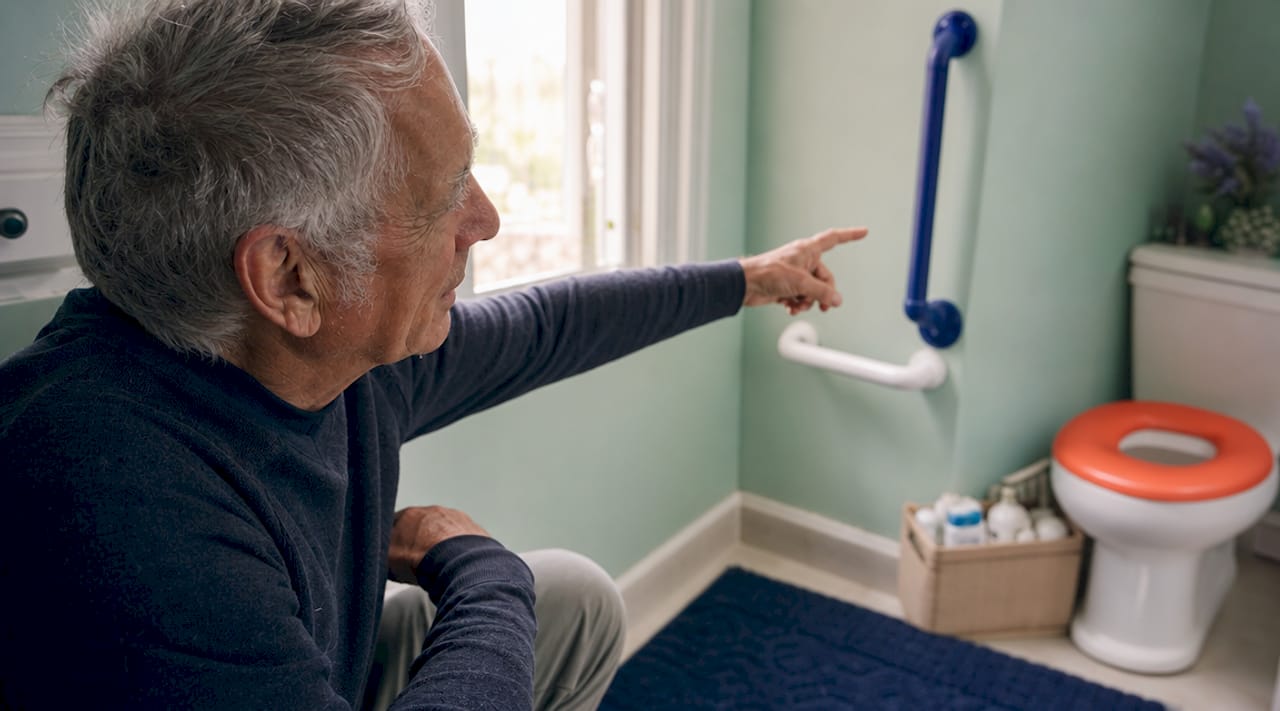
The bathroom is the highest risk area for people living with dementia. Slippery surfaces, complex sequencing tasks such as bathing, and the danger of scalding water combine to make it the most accident-prone room in the house. Addressing the bathroom first is the single most impactful decision you can make.
Beyond the bathroom, several other areas carry serious risk:
- Kitchen: Sharp utensils, open flames, and toxic cleaning products are all within easy reach. A person with dementia may leave the hob on, mistake cleaning pods for food, or handle knives unsafely.
- Bedroom: Night-time disorientation leads to falls when getting out of bed. Mirrors can cause distress, and low or unstable furniture creates trip hazards.
- Hallways and staircases: Poor lighting and loose rugs are the main culprits here. Staircases without secure handrails are particularly dangerous for someone with impaired depth perception.
- Outdoors: Gardens and paths present risks from uneven surfaces, steps, and the possibility of wandering beyond the property unsupervised.
Understanding where the risks are concentrated helps you prioritise your efforts. You do not need to modify everything at once. Start with the bathroom and kitchen, then work outward systematically.
What modifications reduce falls and injuries in a dementia-friendly home?
Fall prevention is the foundation of any dementia home safety plan. The modifications below are listed in order of impact, starting with the changes that deliver the greatest reduction in risk.
- Install grab bars in the bathroom. Bars must be anchored to wall studs for effective weight support. Suction-cup bars are not safe for a person who needs to bear full body weight on them. Position bars near the toilet, shower entry, and bath edge.
- Set the water heater to 49°C (120°F) or below. Water above this temperature causes scalding injuries within seconds. Fitting an anti-scald valve at the tap provides an additional safeguard if the boiler setting is adjusted by someone else.
- Remove loose rugs and secure floor coverings. Removing throw rugs and increasing lighting intensity reduces both fall risk and confusion. Replace rugs with non-slip mats in wet areas.
- Improve lighting throughout the home. Recommended lighting levels for people with dementia are approximately double those needed by younger adults. Fit motion-activated nightlights in hallways, bathrooms, and bedrooms to reduce disorientation during night-time trips.
- Rearrange furniture to create clear pathways. Remove clutter from walkways and ensure chairs and tables are stable enough to be used as support points. Avoid glass-topped furniture.
- Cover or remove mirrors. Reflections cause confusion and sometimes distress because a person with dementia may not recognise their own reflection, which can trigger paranoia or agitation. Reflective or shiny floors carry a similar risk, as they may be misread as wet surfaces.
Pro Tip: Use contrasting colours on furniture edges, toilet seats, and door frames. The Alzheimer’s Association home safety checklist confirms that colour contrast helps people with dementia perceive boundaries, reducing both falls and confusion.
How can caregivers prevent wandering without restricting independence?
Wandering is one of the most distressing risks for families. The goal is not to confine your loved one but to create an environment where they can move freely within a safe boundary.
- Reposition door locks. Place locks and latches at the top or bottom of doors rather than at eye level. A person with dementia is less likely to notice or operate a lock that is out of their habitual line of sight.
- Fit door alarms and chime alerts. These notify you the moment a door or window is opened, giving you time to respond before the person leaves the property.
- Use GPS tracking devices. GPS devices and door sensors effectively alert caregivers to wandering incidents. Project Lifesaver, a programme used by specialist search teams, locates participants on average within 30 minutes. This is a meaningful reassurance if your loved one does leave the home.
- Secure the garden. Fencing with a self-latching gate allows outdoor access without the risk of wandering onto a road. Ensure the path is even and well-lit.
- Create a safe indoor circuit. A clear, unobstructed loop through the main living areas gives a person with dementia the opportunity to walk and move without encountering hazards.
“Introduce safety measures gradually and sensitively. Sudden, sweeping changes to the home environment can increase anxiety and resistance in people living with dementia. One or two changes at a time, explained calmly, are far better tolerated.”
For further reading on maintaining autonomy alongside safety, the Kells-care guide on promoting independence at home offers practical strategies for caregivers.
What steps address medication, hazardous items, and fire safety?
Poisoning and fire are two risks that are easy to underestimate until an incident occurs. Both are preventable with straightforward precautions.
- Lock away all medications. Even familiar, over-the-counter medicines can be taken in dangerous quantities. Use a lockable medicine cabinet and keep only the current day’s doses accessible.
- Store cleaning products securely. Colourful laundry pods are frequently mistaken for sweets or food. Keep them in their original packaging, locked away, and never in decorative containers.
- Fit childproof latches on hazardous drawers and cupboards. This applies to anything containing sharp objects, razors, heavy tools, or toxic substances.
- Install a stove shut-off device. These devices cut power to the hob after a set period of inactivity. They are one of the most cost-effective fire prevention tools available for a dementia-friendly kitchen.
- Secure matches and lighters. Store them out of sight and reach. If the person smokes, supervise this activity directly.
- Check smoke detectors monthly. Replace batteries at least once a year. Ensure your fire safety plan accounts for the fact that a person with dementia may not respond to an alarm in the expected way.
Pro Tip: Walk through your home with a home safety checklist for dementia from the Alzheimer’s Association. It covers room-by-room hazards and is one of the most thorough free resources available to caregivers.
How do you conduct a home safety audit as dementia advances?
A one-time assessment is not enough. Dementia progresses, and the home environment needs to keep pace with changing abilities. The following steps give you a structured way to audit and adapt over time.
- Start with the bathroom and kitchen. These rooms carry the highest concentration of risk. Resolve hazards here before moving to other areas.
- Observe movement and daily routines. Watch how the person navigates the home at different times of day. Night-time behaviour often reveals hazards that are invisible during daylight hours.
- Practise sensory scanning. The Dementia Society recommends viewing the home from the perspective of someone with dementia. Crouch to different heights, look for confusing patterns, listen for background noise that might increase agitation, and identify anything that could be misidentified.
- Implement changes in phases. Major modifications done all at once can overwhelm and confuse people with dementia. Prioritise immediate high-impact concerns such as fall hazards and wandering risks, then introduce further changes gradually.
- Test and maintain all safety devices. Door alarms, smoke detectors, and GPS trackers all require regular checks. Set a monthly reminder to test each device.
- Request a professional assessment. Occupational therapists identify hidden risks and provide customised recommendations. Local council services in the UK often provide needs assessments at no cost to the family.
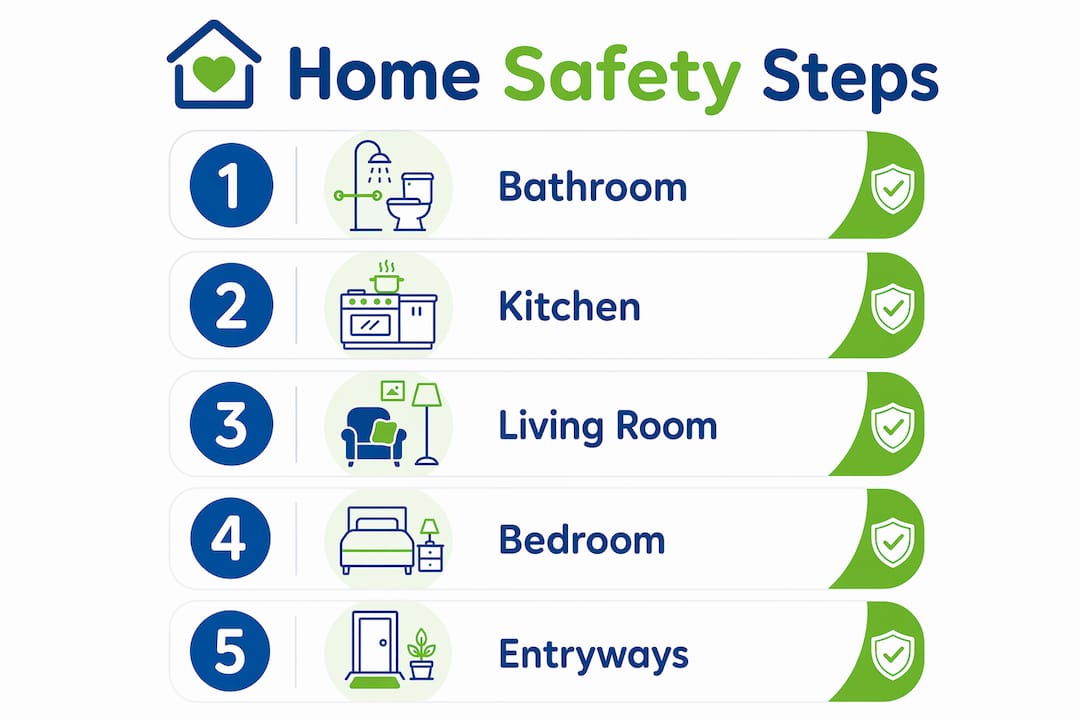
| Area | Priority action |
|---|---|
| Bathroom | Grab bars, anti-scald valve, non-slip mat |
| Kitchen | Stove shut-off device, locked cupboards |
| Bedroom | Motion nightlight, stable furniture, mirror covered |
| Hallways | Improved lighting, handrails, rugs removed |
| Outdoors | Secure fencing, even paths, gate latch |
Keeping a written log of changes and the person’s responses helps you track what is working and informs future decisions. Share this log with any professional carers involved in the person’s care.
Key takeaways
Effective dementia home safety requires phased environmental modifications, targeted technology, and regular professional review rather than a single one-off overhaul.
| Point | Details |
|---|---|
| Bathroom first | Address slippery surfaces, grab bars, and anti-scald valves before any other room. |
| Anchor grab bars properly | Bars must be fixed to wall studs; suction-cup versions are unsafe for weight-bearing use. |
| Phase your changes | Introduce modifications gradually to avoid overwhelming the person with dementia. |
| Use technology | GPS trackers, door alarms, and stove shut-off devices provide reliable, low-cost protection. |
| Seek professional input | Occupational therapists and local council assessments identify risks that caregivers often miss. |
Dan’s view on balancing safety and autonomy
After working alongside families navigating dementia care, the thing I see most often is caregivers trying to do everything at once. They read a checklist, feel overwhelmed, and either do nothing or make so many changes in a week that their loved one becomes distressed and resistant. Neither outcome serves anyone well.
The most effective approach I have seen is to start with one room, observe carefully, and then move on. The sensory scanning technique is genuinely underused. Most people assess a home as themselves, not as someone with impaired depth perception, reduced contrast sensitivity, and difficulty interpreting reflections. When you actually sit at the height of a chair and look at the floor, you start to see what your loved one sees.
The other thing I would say clearly is this: safety and dignity are not in conflict. A well-placed grab bar does not diminish a person. A locked medicine cabinet does not strip away independence. What does cause harm is a fall that leads to a hospital admission, or a wandering incident that ends in injury. The modifications in this guide are not restrictions. They are the conditions that allow someone to remain at home, in familiar surroundings, for as long as possible.
Seek professional guidance early. Do not wait until a crisis forces your hand. An occupational therapist assessment, combined with the dementia care strategies that experienced providers use, gives you a far stronger foundation than any checklist alone.
— Dan
How Kells-care supports dementia home safety in London
Kells-care has provided professional home care across London for over 30 years, supporting families with everything from check-in visits to round-the-clock care. If you are working through the safety modifications in this guide and want expert support, Kells-care’s carers are fully qualified, DBS checked, and regulated by the Care Quality Commission (CQC). Download the free home care guide for detailed, practical resources tailored to families caring for someone with dementia at home. For personalised advice on dementia-specific care, the dementia personal care guide covers home adaptations and professional support options in detail. Contact Kells-care to discuss a care plan built around your loved one’s specific needs.
FAQ
What is the most dangerous room in a home for someone with dementia?
The bathroom carries the highest risk due to slippery surfaces, complex tasks, and scalding water. Installing grab bars anchored to wall studs and setting the water heater to 49°C or below are the two most impactful changes you can make.
How do I stop someone with dementia from wandering?
Reposition door locks to non-obvious heights, fit door alarms, and consider a GPS tracking device. Project Lifesaver participants are located on average within 30 minutes, making GPS technology a reliable safety net for families.
Should I remove mirrors from a home with someone with dementia?
Mirrors should be covered or removed because people with dementia may not recognise their reflection, which can cause confusion, paranoia, or agitation. Shiny or reflective floors carry a similar risk and should be avoided.
How often should I review home safety modifications?
Review the home environment every three to six months, or sooner if the person’s abilities change noticeably. A professional assessment from an occupational therapist provides the most thorough evaluation and is often available through local council services at no cost.
What is the best way to prevent medication accidents at home?
Lock all medications in a secure cabinet and keep only the current day’s doses accessible. Cleaning products, particularly colourful laundry pods, should also be locked away in their original packaging to prevent them being mistaken for food.