No cure for Alzheimer’s disease currently exists, but there are lifestyle changes we can make to fight dementia and Alzheimer’s.
As we age, our risk of being effected by Alzheimer’s increases. After 65 years old, the risk of developing Alzheimer’s doubles roughly every 5 years. It is estimated that over the age of 65, dementia effects every one in 14 people. And that over the age of 80, it effects one in six people.
Alzheimer’s causes its effect on those who suffer with the disease. It interferes with neurons in the brain. It speeds up the death of neurons. This happens anyway in a healthy brain as it ages. But Alzheimer’s accelerates the process. This causes a loss of brain function. Impacting memory, communication skills, and logic and reasoning. With Alzheimer’s, a plaque is formed in the brain. This causes an obstruction between neurons and cells.
Alzheimer’s also blocks glucose from reaching the brain. There is inflammation, low oxygen getting to brain cells. Along with poor blood flow.
There is medication available that has been shown to help alleviate the symptoms of dements and Alzheimer’s. However, the medication does not cure it or stop it.
Interestingly, what has been shown potential to help treat Alzheimer’s disease sufferers, are changing lifestyle factors. A change in lifestyle in some studies had a greater impact than current medication available.
This natural holistic approach involved addressing patients’ diet, exercise, sleep, and stress.
What changes can we make to our life to help fight dementia and Alzheimer’s disease?
Since Alzheimer’s disease causes inflammation and prevents glucose from reaching the brain. By addressing these issues, a lot of symptoms of Alzheimer’s can be relieved.
Reducing sugar intake, and reducing toxins in the diet, can all help to reduce the chances of the onset of dementia.
Fasting has been shown to reduce inflammation. An example of this might be “intermittent fasting”, which popularly entails only eating during an 8 hour window, e.g. from 12pm to 8pm.
Eating a lower carbohydrate diet, in which the body uses ketones rather than sugar for energy, has been shown to reduce the risks of Alzheimer’s and dementia.
A diet that can have many health benefits, similar to a ketogenic diet, is a Mediterranean diet. This entails reducing sugar intake, and avoiding toxins. A Mediterranean diet has been shown to improve cognitive function and has other benefits. It involves eating lots of fruit and vegetables, organic free-range meat and poultry, olive oil, limited alcohol, and lots of water.
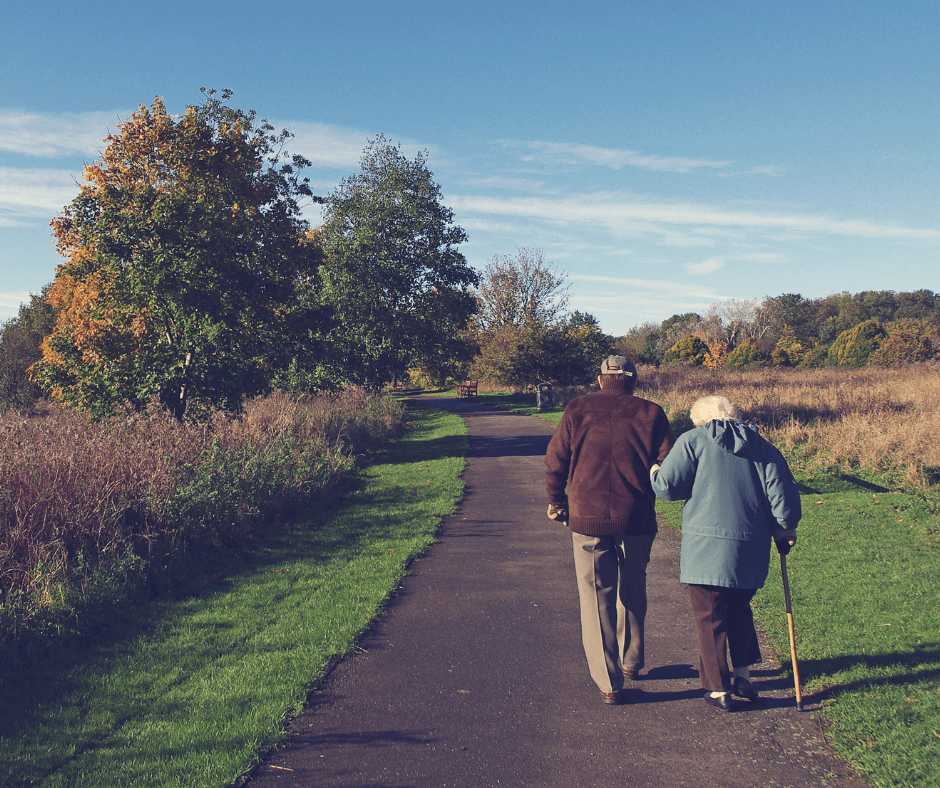
There is a large amount of evidence showing that physical exercise helps the brain. And it can lower your risk of Alzheimer’s disease. The evidence shows that exercise helps with cognitive function. It prevents memory loss, and can help prevent cognitive decline as we age. Exercise can involve something as simple as going for walks.
A quote from the Alzheimer’s Society stated that keeping the body and brain active across life can “go some way to reducing the risk”.
Exercise like dancing can be sociable. And learning and memorising dance steps and routines activate neural pathways to help prevent Alzheimer’s disease and dementia.
Sleep deprivation can cause inflammation and can increase stress. For overall health, not just for the prevention of dementia or Alzheimer’s disease, you should try and get 8 hours of sleep a night.
This one can be tricky. But trying to alleviate stress is very important for fighting dementia. As well as for good health. High stress levels cause you to have a weakened immune system. This means that your body is more vulnerable to getting ill.
Calming activities can be helpful, like going for walks. Also, meditation and breathing exercises work well for some people to keep stress away. Another solution is to just talk to somebody about any concerns, so to help rid anxiety.
While no cure might currently exist for Alzheimer’s disease, you can see that there are still lifestyle changes we can make to fight it.
If you would like to chat about how we can tailor our home care services to meet your specific needs, please get in touch!
www.kells-care.com
info@kells-care.com
020 8886 6589
348 Green Lanes, London N13 5TJ
https://www.alzheimers.net/foods-that-induce-memory-loss/
https://www.alzheimers.org.uk/about-dementia/risk-factors-and-prevention/smoking-and-dementia
A practical home care safety checklist for London families. Learn key steps to reduce risks,…
Discover what post-hospital home care involves, how it supports recovery, and how London families can…
Discover what domiciliary care means for London families, including services, costs, regulation, and how to…
Discover how elderly home care works in London, what services are included, and how to…
Discover how home care preserves independence, reduces costs, and supports emotional well-being for elderly relatives…
Learn practical strategies for communicating effectively with carers to improve care collaboration, build trust, and…